
The FloTracG Edge
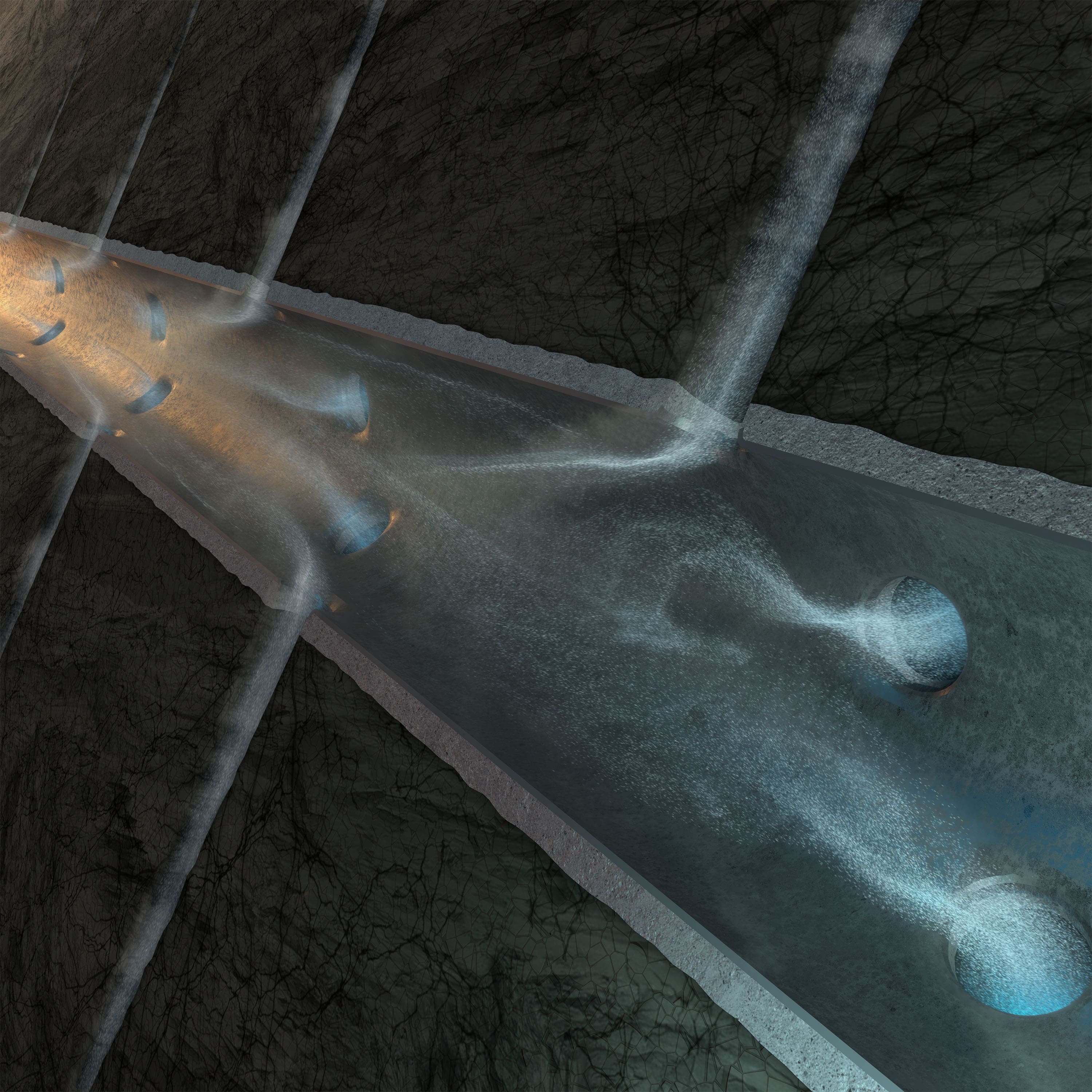
Natural gas demand is rising as it gains recognition as a bridge fuel and as new LNG exports facilities come on-line. In response, natural gas producers are increasingly focused on economics and opportunities to optimize the multi- stage hydraulic fracturing process, completion strategies, and well placement designs—key components of total cost. To justify revenue plans and capital expenditures, operators need a better understanding of complex gas reservoir systems, to enable granular flow performance analysis, and to demonstrate competitive production costs.
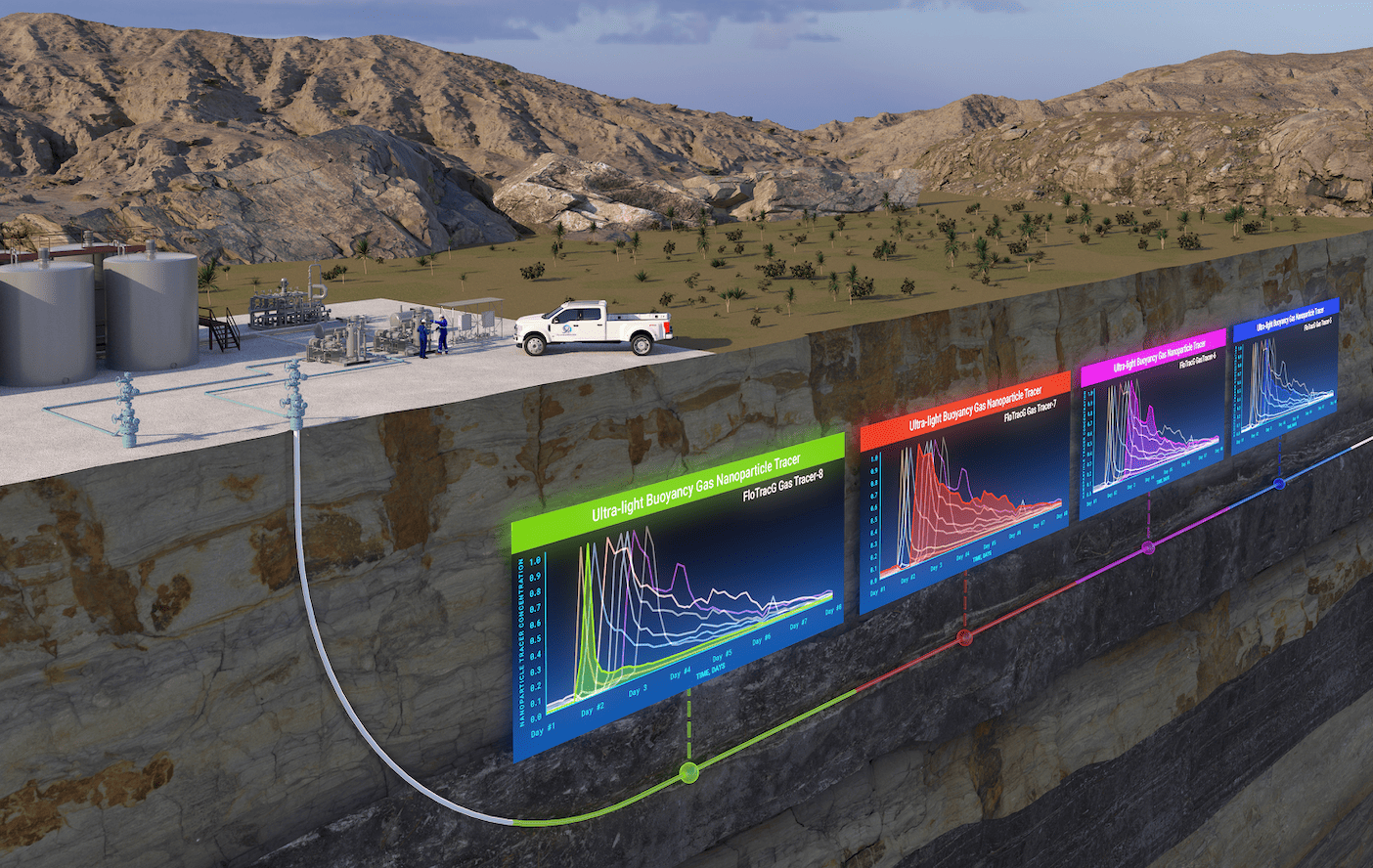
Building on the field-proven success of FloTrac™ ultra-high-resolution nanoparticle tracers for liquids production reservoirs, FloTracG ultra-light buoyancy gas tracers are now available for various types of gas and gas-condensate reservoirs. FloTracG offers the same breakthrough nanoparticle tracer technology for gas production flow mapping as FloTrac does for liquids.
Operators are increasingly recognizing the value of nanoparticle tracers as an economical, environmentally friendly, and simplified diagnostic solution for flow mapping and granular stage-specific production diagnostics. FloTracG technology is a newly introduced, non-invasive tool that offers a novel solution for gaining stage-level insights to enhance stimulation efficiency and achieve the best production across all frac stages.
Fracture Diagnostics
• Assess the overall effectiveness of multistage hydraulic fracturing operations by tracing stage-level injected fluid flow to the corresponding gas production flow.
• Understanding fracture flow propagation and connectivity between frac stages.
Inter-well Communication
• Evaluate whether each frac stage is stimulating a unique portion of the formation to maximize contact area and stimulated rock volume (SRV).
Production Allocation and Optimization
• Analyze stage-level production from specific reservoir zones and their relative contribution to total production to guide future completion designs.
• Evaluate whether each frac stage is stimulating a unique portion of the formation to maximize contact area and stimulated rock volume (SRV).
• Assessing the effectiveness of hydraulic fracturing treatments.
Injection Monitoring and Subsurface Surveillance
• Adjust gas reinjection to the gas cap, optimizing oil rim production and minimizing gas breakthroughs in oil-producing wells.
• Optimize gas reinjection strategies to enhance gas or gas-condensate recovery.
• Tailor gas injection practices to maximize gas recovery in underground storage facilities.
• Manage and monitor the propagation of injected CO2 within depleted gas reservoirs for effective geological storage.